How did a crime story catch the lottery insider who rigged the Hot Lotto draw?
· based on the channel Max Crime
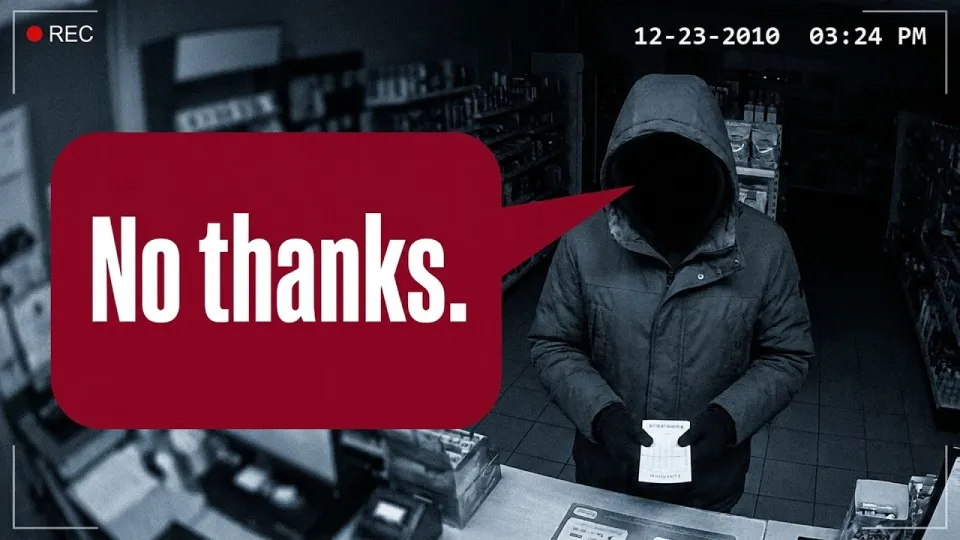
The crime story of Eddie Tipton is the story of a man who helped build the machine that picks lottery winners and then used it for himself. As information security director at the Multi-State Lottery Association, Tipton had access to the random number generators behind games such as Hot Lotto, and he was explicitly forbidden from playing any of them. A $16.5 million Hot Lotto ticket bought in Des Moines in December 2010, an anonymous trust that tried to claim it, and two ordinary words on a store recording — "No thanks" — eventually exposed him.
What is the crime story behind the rigged Hot Lotto jackpot?
The core of the case is simple: a lottery insider manipulated the code that generated winning numbers, then arranged for someone else to present the ticket. The prize at stake was $16.5 million, won on a Hot Lotto draw in December 2010 with a ticket purchased at a convenience store in Des Moines, Iowa.
For almost a year, nobody came forward. That silence was itself unusual — large jackpots normally attract a claimant within days — and it put the ticket on the radar of lottery officials long before any criminal investigation began. When a claim finally arrived, it came through a lawyer acting for an anonymous trust rather than from a named human being, and it landed with barely more than an hour to spare before the deadline.
How did investigators link Eddie Tipton to the winning ticket?
The link was built from video, voice and paperwork rather than from a confession. Three pieces of evidence did most of the work:
- The store recording. Surveillance footage from the retailer showed the man who bought the ticket. When the Iowa Division of Criminal Investigation released the video publicly in 2014, Tipton's coworkers recognized both his voice and the way he moved.
- The phone call. A man calling to ask about the ticket's status gave a story that did not match what the recording showed — the timing and the details of the purchase didn't line up.
- The two words. On the recording, the buyer declined something the clerk offered with a flat "No thanks." That phrase, matched against the caller's account, helped place Tipton at the counter.
- The trust. The ticket was submitted through a lawyer on behalf of an anonymous entity, a structure that shielded the real owner from public view but also drew scrutiny to why the winner wanted to stay hidden.
Tipton's employment made the picture sharper. He worked for the Multi-State Lottery Association, the organization that supplies lottery games and drawing equipment to member state lotteries, and his role gave him knowledge of exactly how the numbers were produced.
Why were the lottery's random number generators so hard to police?
The draws were not conducted with balls and air; they were produced by computers. The random number generators sat on machines deliberately kept off the internet, in a room whose camera captured roughly one second of footage for every minute of real time. That design was meant to prevent tampering from outside, and it did — but it assumed the threat came from outside.
The gap was human. Someone with legitimate access to the code could alter how numbers were generated, and the offline setup meant the manipulation left no network trail to follow. The intermittent camera coverage made it worse: a short action inside the room might never appear on video at all. Investigators therefore had to reconstruct events from logs, access records and the behavior of the numbers themselves rather than from a clean recording of the act.
What happened at trial and on appeal in the Tipton case?
Tipton was charged in Polk County, and the prosecution depended heavily on the argument that he had both the means and the opportunity to rig the draw. The defense attacked the state's theory of how the manipulation was carried out and questioned whether the evidence placed him at the store.
A conviction followed, and the case then turned on a legal deadline. On appeal, the Iowa Supreme Court examined whether the state had filed within the time allowed, an issue that had nothing to do with whether the lottery was actually rigged and everything to do with procedure. The dispute over that deadline kept the case alive after the verdict and shaped what came next.
What did Eddie Tipton admit, and what happened to the money?
In 2017, Tipton pleaded guilty and admitted manipulating the code used to generate winning lottery numbers. The admission closed the central factual question of the crime story: the draws had been influenced from inside the organization responsible for keeping them honest.
The $16.5 million Hot Lotto prize from the Des Moines ticket was never paid on that claim. Prosecutors and lottery officials treated the claim as tainted by fraud, and the trust that tried to collect it did not walk away with the jackpot. Tipton's cooperation with investigators across multiple states became part of the broader fallout, which reached lotteries beyond Iowa because the same random number generators served many member games.
The practical lesson for lottery operators was uncomfortable: security audits that focus on hackers and network intrusion can miss the person who wrote the software in the first place.
Why the case still matters for lottery integrity
The Tipton affair changed how lotteries think about insider risk. Controls that had been treated as sufficient — offline machines, restricted access, camera coverage — were revealed as partial safeguards when the person with access was also the person with expertise. The case pushed member lotteries toward stricter separation of duties, independent review of random number generator code, and tighter monitoring of employees who are barred from playing.
It also showed how much weight a few seconds of ordinary footage can carry. A clerk's question, a customer's "No thanks," and a timestamp were enough to turn an anonymous trust into a named suspect.
Conclusion
Eddie Tipton's downfall came not from a dramatic break in the code but from the small, human details around it: a face on a store camera, a voice his coworkers knew, and a two-word refusal. The Hot Lotto jackpot of $16.5 million was never paid on that claim, and the insider who wrote the numbers ended up admitting he had rigged them. The full breakdown of the case, from the unclaimed ticket to the 2017 guilty plea, is told in the Max Crime video above, which walks through the investigation in order using court records and the footage released by the Iowa DCI.
Key takeaways
- Eddie Tipton was information security director at the Multi-State Lottery Association, the body that runs games such as Hot Lotto for member lotteries.
- A Hot Lotto ticket bought in Des Moines in December 2010 won a $16.5 million jackpot that went unclaimed for nearly a year.
- Tipton was barred by his job from playing lottery games, yet investigators tied him to the ticket through store video and a recorded phone call.
- The winning numbers came from random number generators kept on computers offline; Tipton had access to the code that produced them.
- He pleaded guilty in 2017 to manipulating the software that generated winning numbers; the $16.5 million was never paid on that claim.
Questions & answers
Was the $16.5 million Hot Lotto prize ever paid out?
No. The claim submitted through an anonymous trust on the Des Moines ticket was never paid, because investigators treated it as part of a rigged draw. The jackpot money did not go to the claimant.
How was Eddie Tipton caught?
Surveillance video from the store was released publicly in 2014, and coworkers recognized his voice and mannerisms. A recorded phone call about the ticket did not match the footage, and the buyer's "No thanks" on the recording helped place him at the counter.
What was Tipton's job at the Multi-State Lottery Association?
He served as information security director, which gave him knowledge of and access to the random number generators used for games such as Hot Lotto. His employment contract barred him from playing those games.
What did he plead guilty to?
In 2017 Tipton admitted manipulating the code used to generate winning lottery numbers. The plea resolved the central allegation that the draws had been influenced from inside the organization that ran them.
Source: He Rigged the Lottery. Two Words Gave Him Away. (crime story) · Markdown version